
This post contains affiliate links, which means I make a small commission at no extra cost to you.
Fresh milled flour sure has become popular, and rightly so. We have seen a shift in our culture over the last few years towards demanding better ingredients and approaching health at a cellular level. And milled flour is part of that.
I began learning about milling my own grains a few years ago, but it seemed like an extra step to the process. But after a little research I was hooked, I was in the rabbit hole as my friend recently told me. And after the initial intimidation after getting my grain mail, I’ve come to really enjoy the process of adding this extra step before I make any bread recipe, pancakes on Saturday morning and feeding my sourdough starter.
If you like this recipe, then you’ll also love my Everyday No-Knead Sourdough Bread recipe and my Hearty No-Knead Sourdough Bread recipe as well! Both of which I’ve also made into a step-by-step class to walk you through if you’re new to sourdough with printable recipe cards. Every recipe can be substituted with fresh milled flour, see tips below for adjusting the recipes.
Why Fresh Milled Flour
Health benefits – commercial, all-purpose flour is often fortified with vitamins that were lost when processing. But freshly milled grains are packed with those nutrients and amazing flavor, and the fermentation of sourdough gives it extra health benefits especially for your gut.
Easy to work with – despite what others may say, fresh milled grains are pretty easy to work with, it might be a slight learning curve, but don’t fret just experiment and enjoy the process of working with something new
Accessible – Finding organic wheat berries to grind at home is wildly accessible. You can find any ancient grains at a local health food store or looking into Azure Standard, Ancient Grains or ordering directly through Mockmill’s website.
prep time: 20 minutes
rest/rise time: 8 hours – 14 hours
bake time: 45 minutes
total time: 9 hours – 15 hours
What You’ll Need
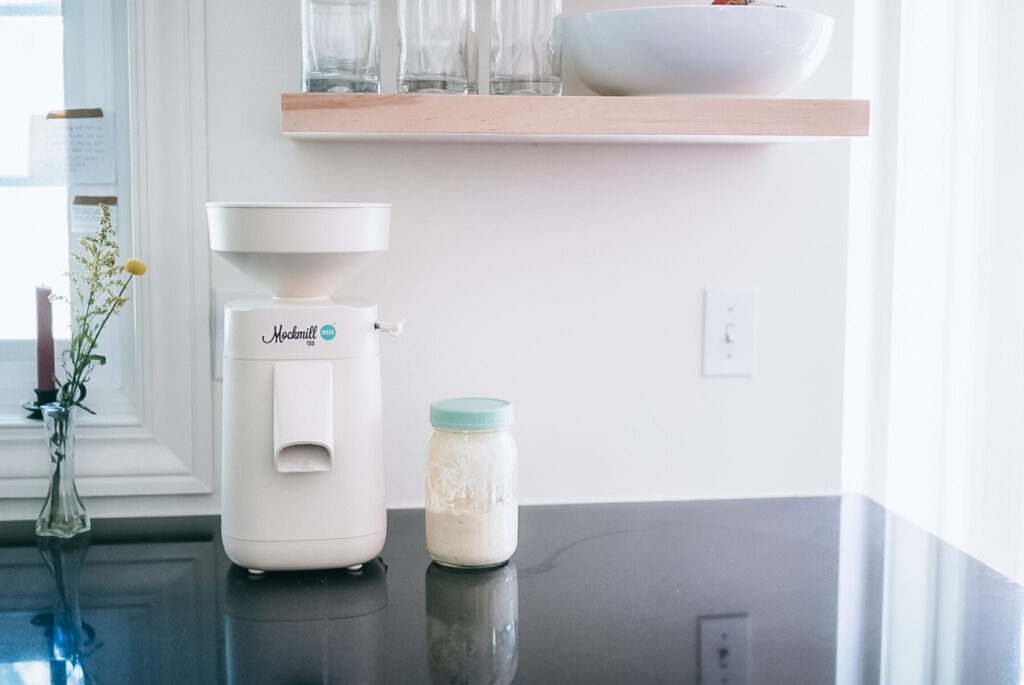
Grain mill (I have the Mockmill 100, but the NutriMill off Amazon is a good option too)
Large, non-plastic mixing bowl
Whisk
Wooden spoon
Tea towel
Plastic wrap
Dutch oven (and here’s one off Amazon that isn’t enameled if you feel more comfortable with that!)
Ingredients
3 1/2 – 4 cups fresh milled flour (don’t have milled flour? here’s my all-purpose flour recipe)
1 3/4 tsp. salt
1/4 tsp. yeast
2/3 cup sourdough starter
1 1/2 cup warm water
For this recipe to rise and bake in the same day, begin between 6-8am. Otherwise, starting this recipe before bedtime to rise overnight works well.
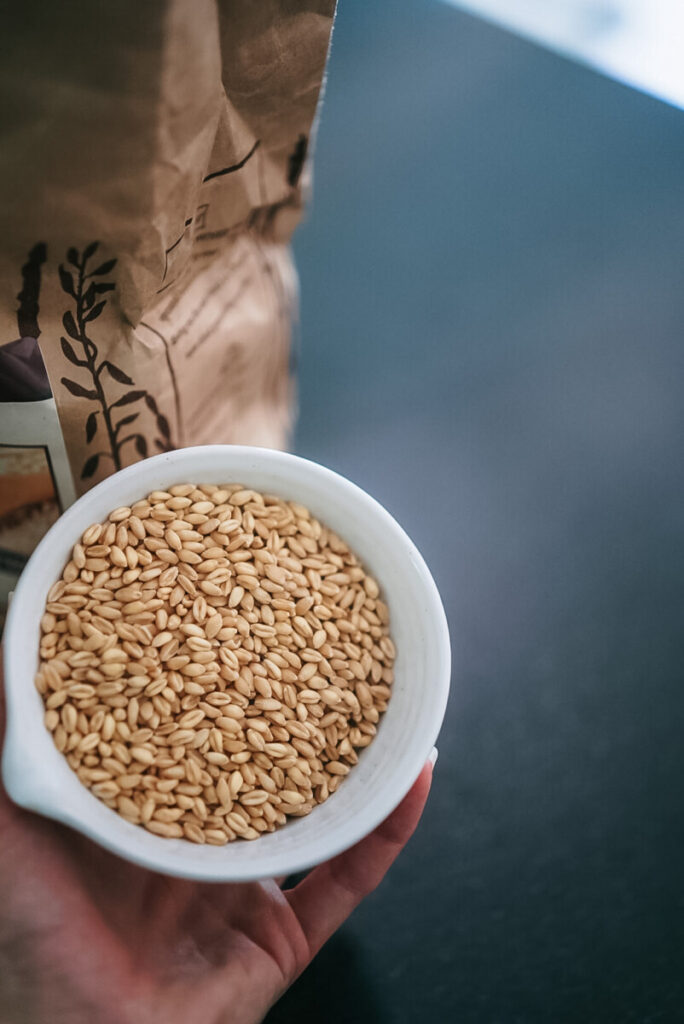
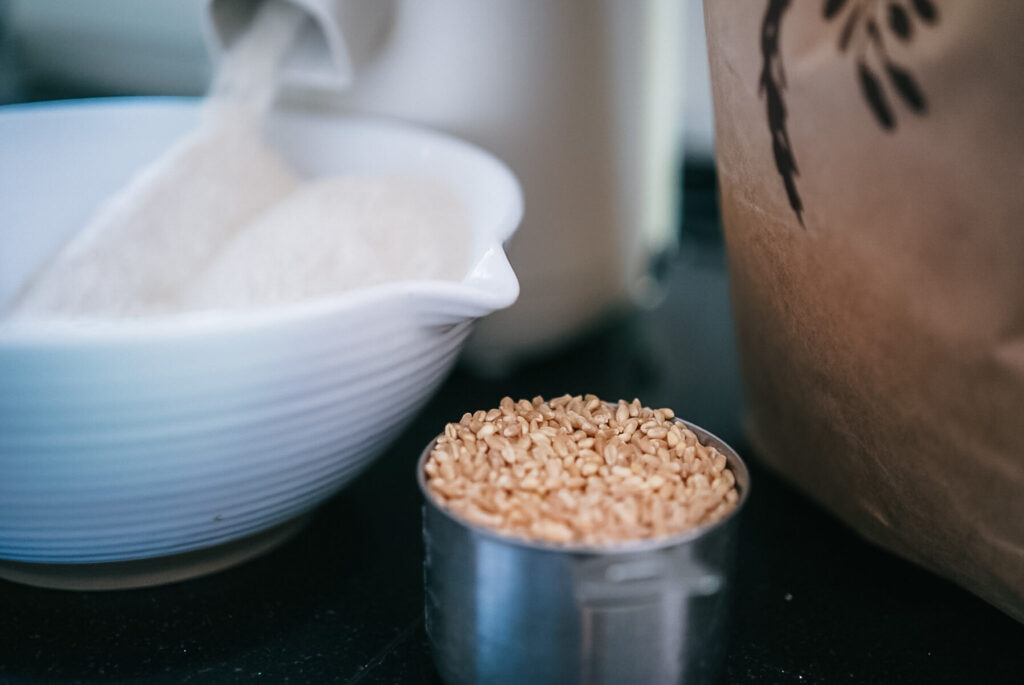
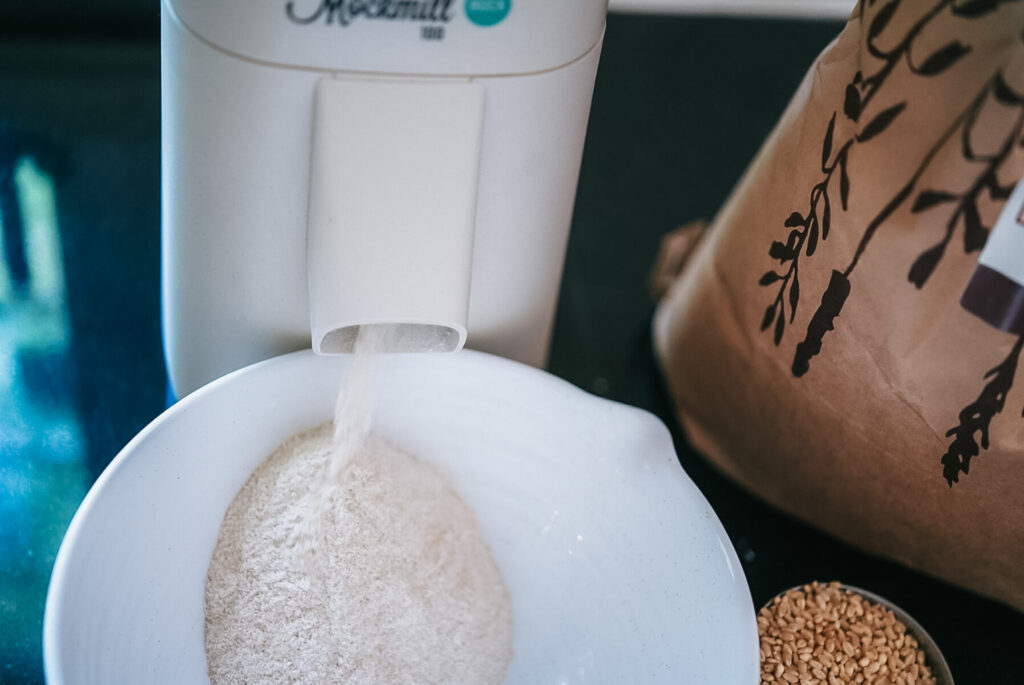
Before mixing all ingredients together, measure and mill your grain. I do this the night before when making a pancake or waffle recipe since it’s loud, otherwise I simply measure/weigh the grain and mill it to use right away. You can use a scale to measure in grams, or estimate by using cups. For this specific recipe, I mill 3 cups of hard white wheat (which is more when milled). I make sure to have enough milled flour for the recipe and to feed my starter with after. I typically mill at either the 2 or 3 on the milling grade.
Once you have your milled flour, begin by adding all the dry ingredients (start with 3 cups of flour, salt and yeast) into a large non-plastic bowl, mix it all together with a whisk. Then in a clear glass measuring cup fill it with warm water to the appropriate amount and slowly stir in the sourdough starter. I personally mix the water and starter together with a metal spoon until all the chunks disappear, it should be thick and cloudy. After it is well mixed, pour the mixture into the bowl of dry ingredients.
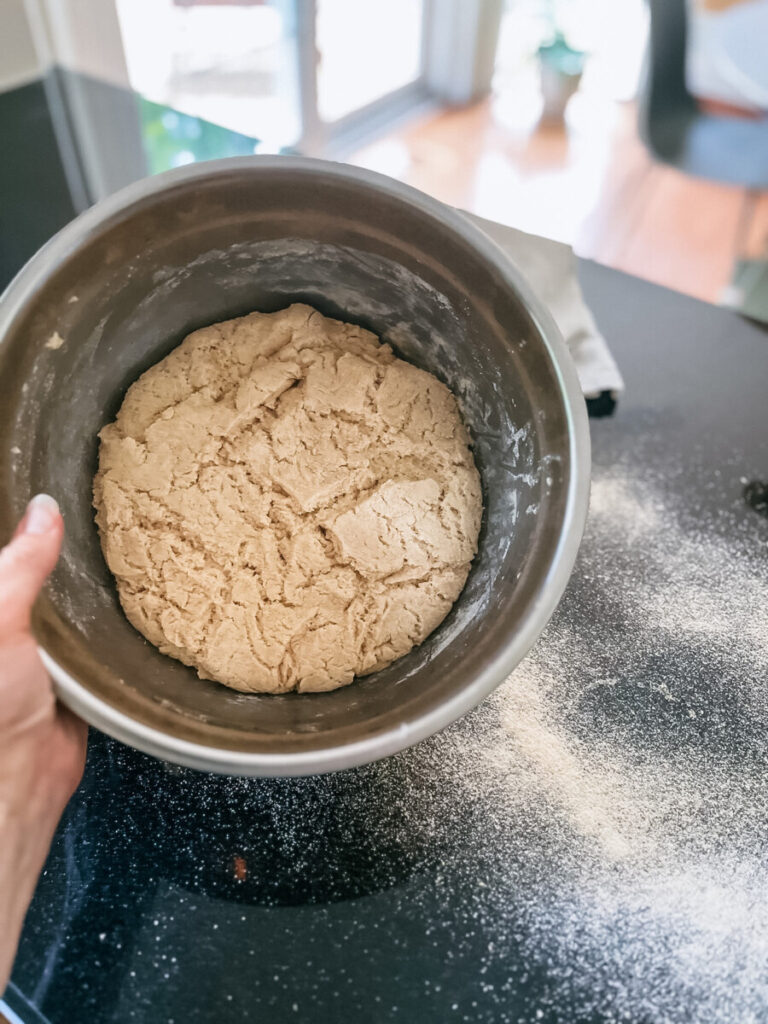
After all of the ingredients are in the same bowl, swap the whisk for a large wooden spoon and slowly but thoroughly mix everything together — eventually I use my hands to not actually “knead” the dough but make sure it’s all together. Since you’re using milled flour it’ll be a different texture and consistency, don’t fret! This is where I will sprinkle more flour into the dough until it comes together nicely but not too firm. Note: don’t form a perfect or dense ball out of the dough with your hands. If the dough is sticky sprinkle more flour and blend it together with your hands.
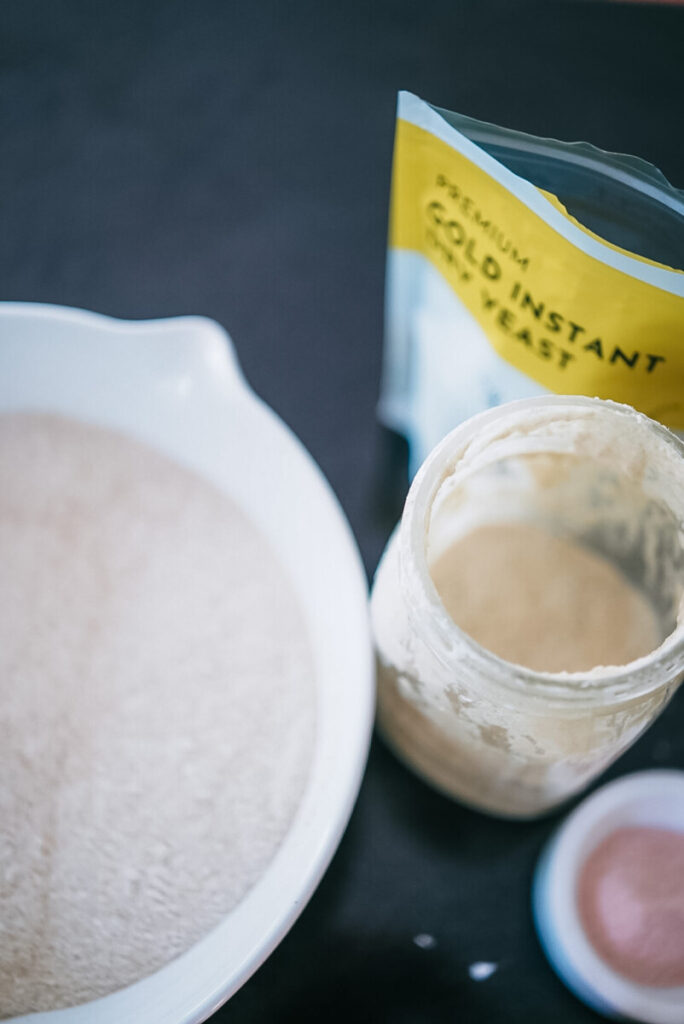
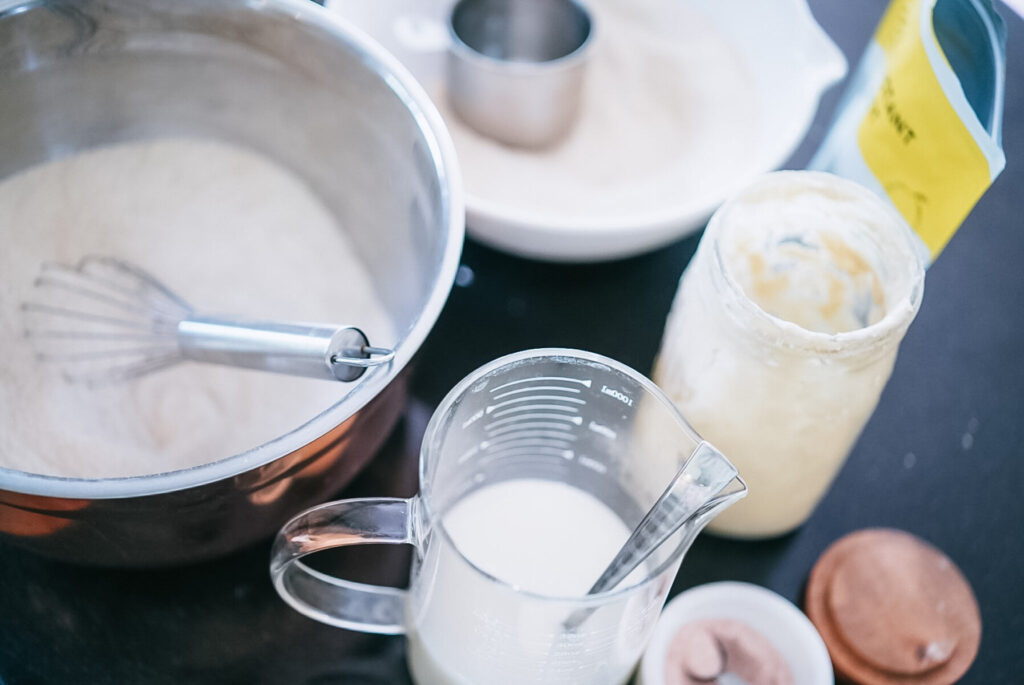
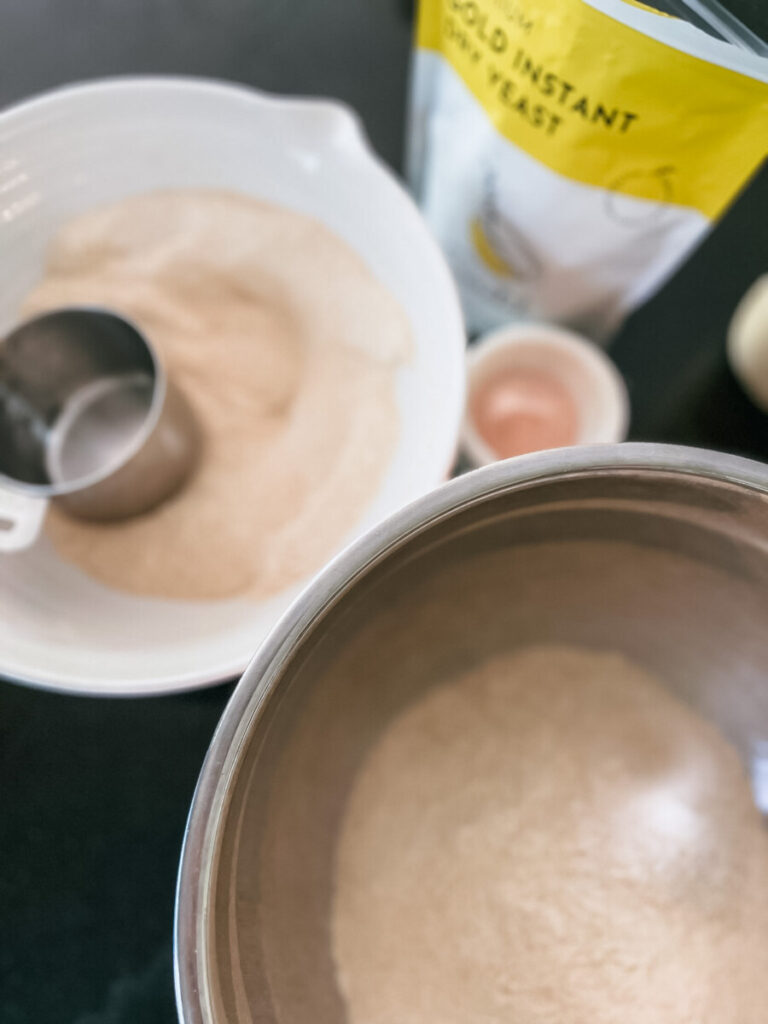
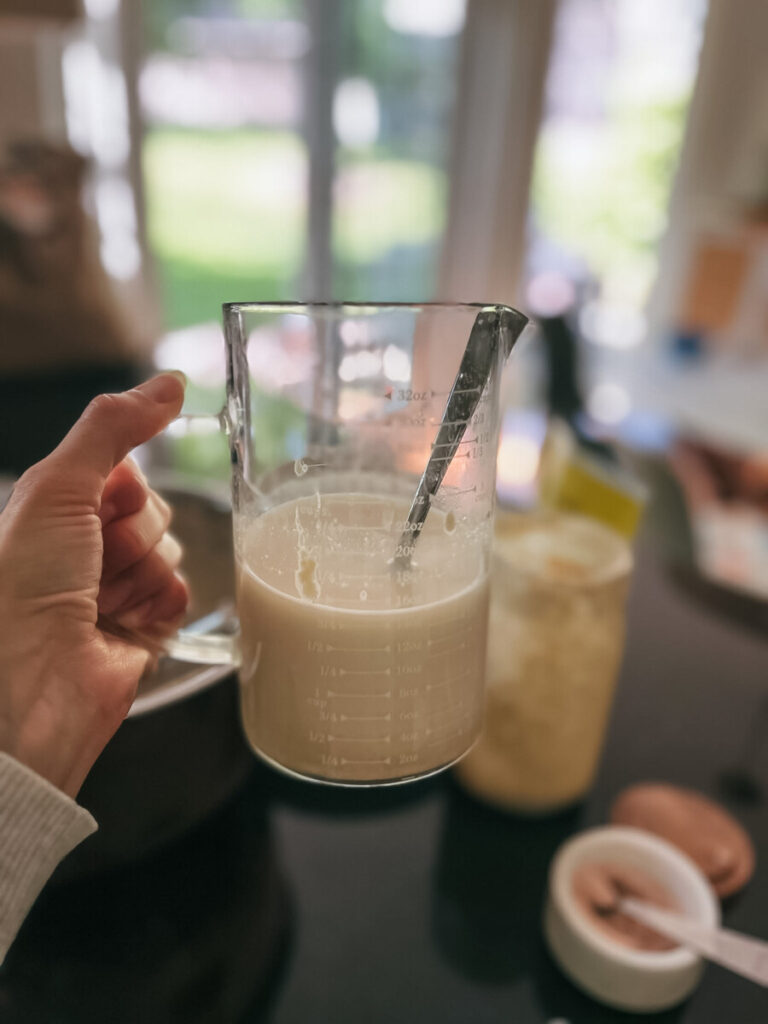
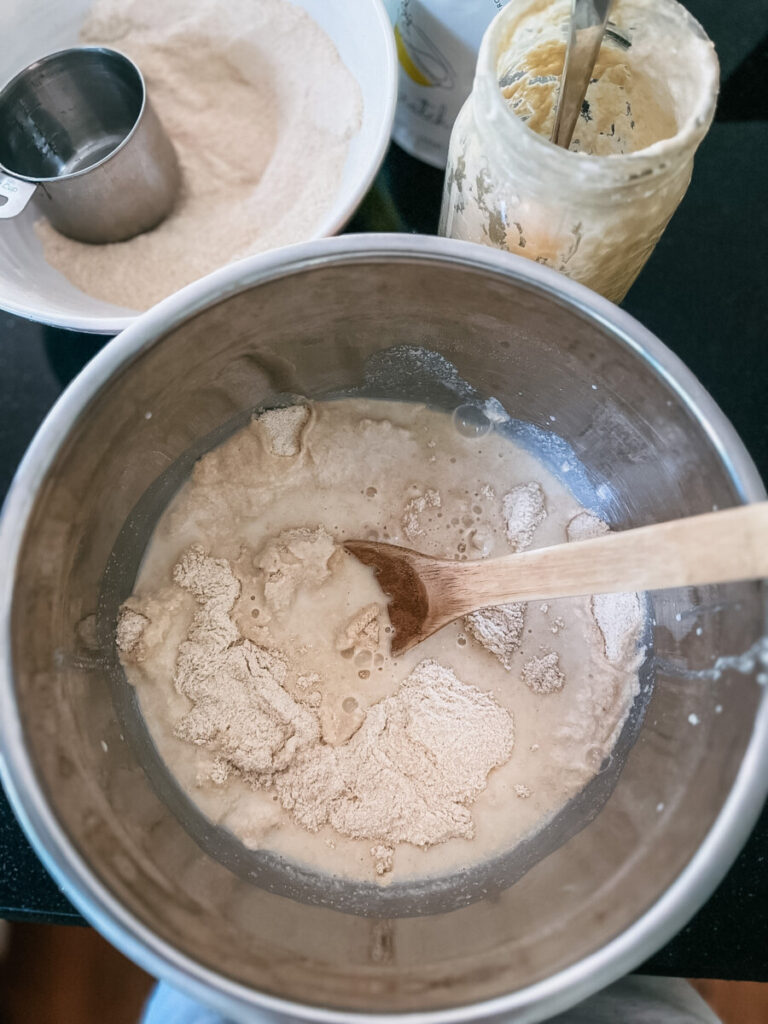
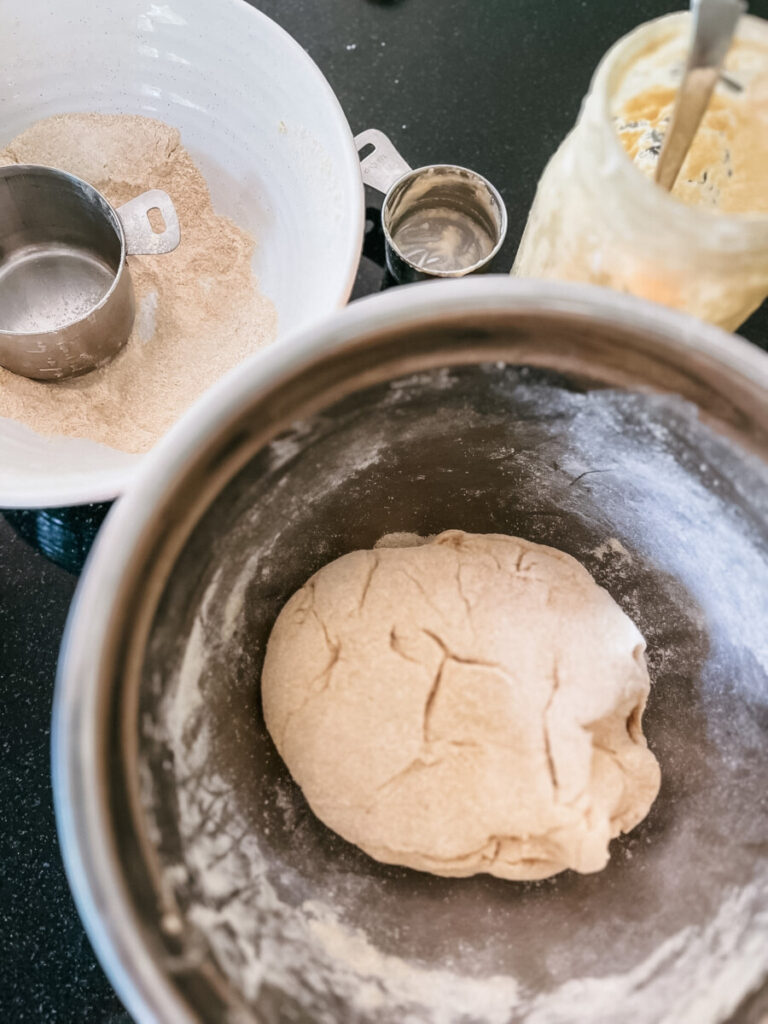
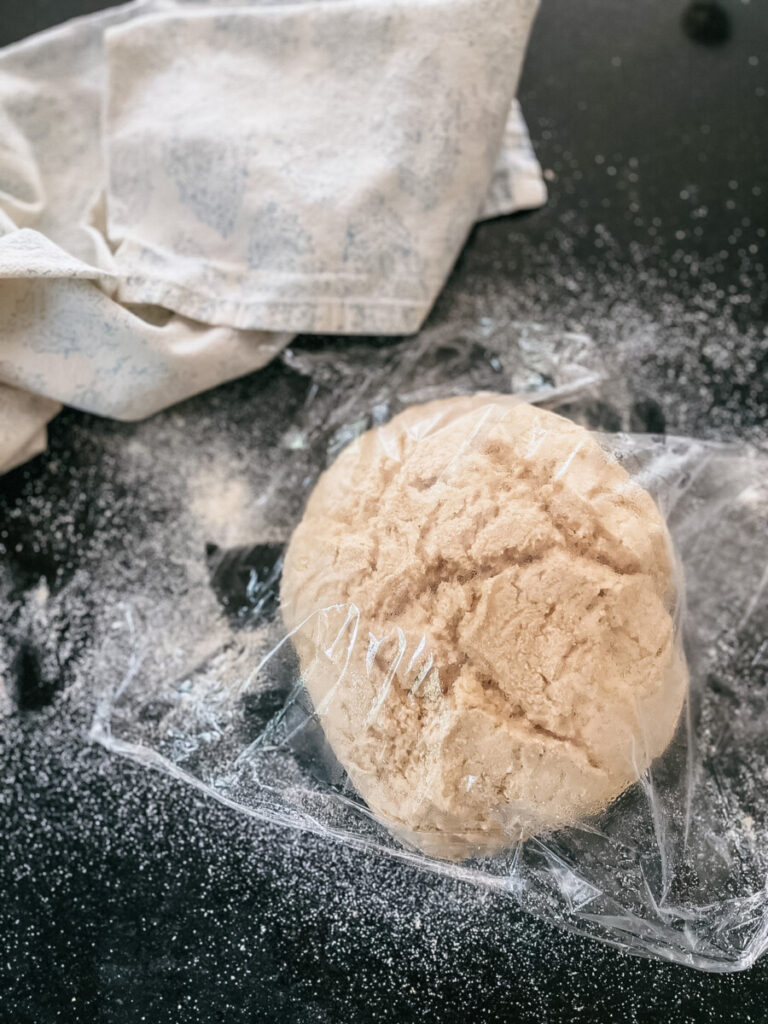
Once your dough is complete, cover the bowl with plastic wrap (I often cover it with a large plastic bread bag and fasten it with a rubber-band, nothing fancy!). And let it sit on your counter for 8 hours or up to overnight.
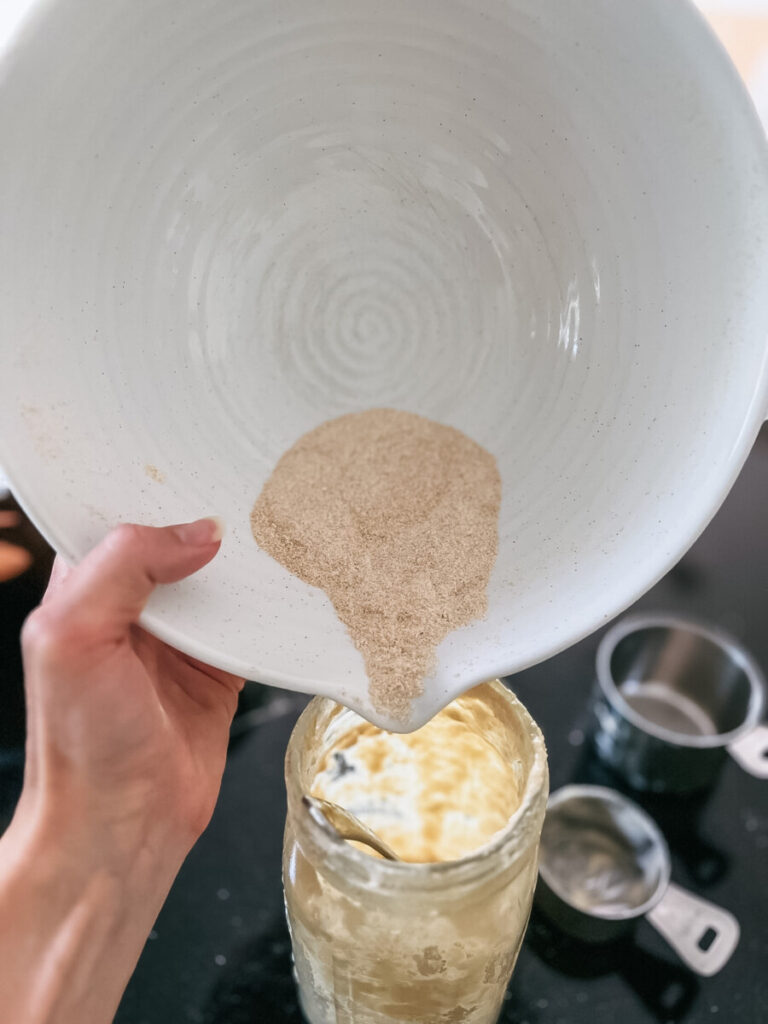
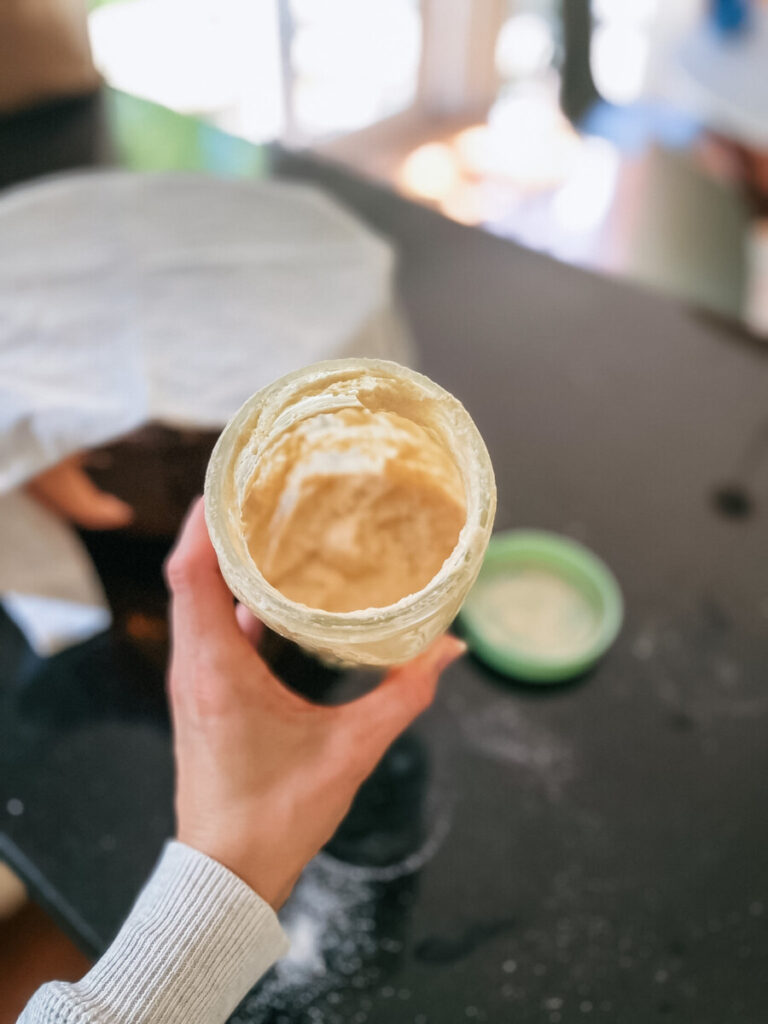
After the dough is covered, feed your starter. I’ve noticed with fresh milled flour it’s more of an experiment and knowing what’s best for your starter than a direct ratio. Start by scooping 1 cup of flour into the remaining starter in your jar and then pour 1/2 cup of distilled water on top of the flour and mix thoroughly with a metal spoon. If it’s dry, add more water; if it seems to wet, add a little more flour until it’s a good consistency. Put the lid on and let it sit out on the counter for an hour or overnight before placing back in the refrigerator. Another thing to note when feeding your starter with fresh milled flour: the flour soaks up liquid differently than all-purpose flour, so be sure to keep an eye on your starter. Feel free to feed it more often or simply mix it well every few days if not making a recipe.
The next morning, the dough should be doubled in size (it might not be as nice and fluffy as an all-purpose loaf, and that’s ok!). With flour on your fingers, gently scrape the dough out of the bowl and place onto a lightly floured surface and turn two times. Cover with plastic and let sit for 15 minutes. Then move the dough to a lightly floured towel, use your hands to mold it into a ball (the shape of a typical sourdough boule) and cover with the towel for 1+ hours. If you let it sit for longer than 2 hours it will start to get dry.
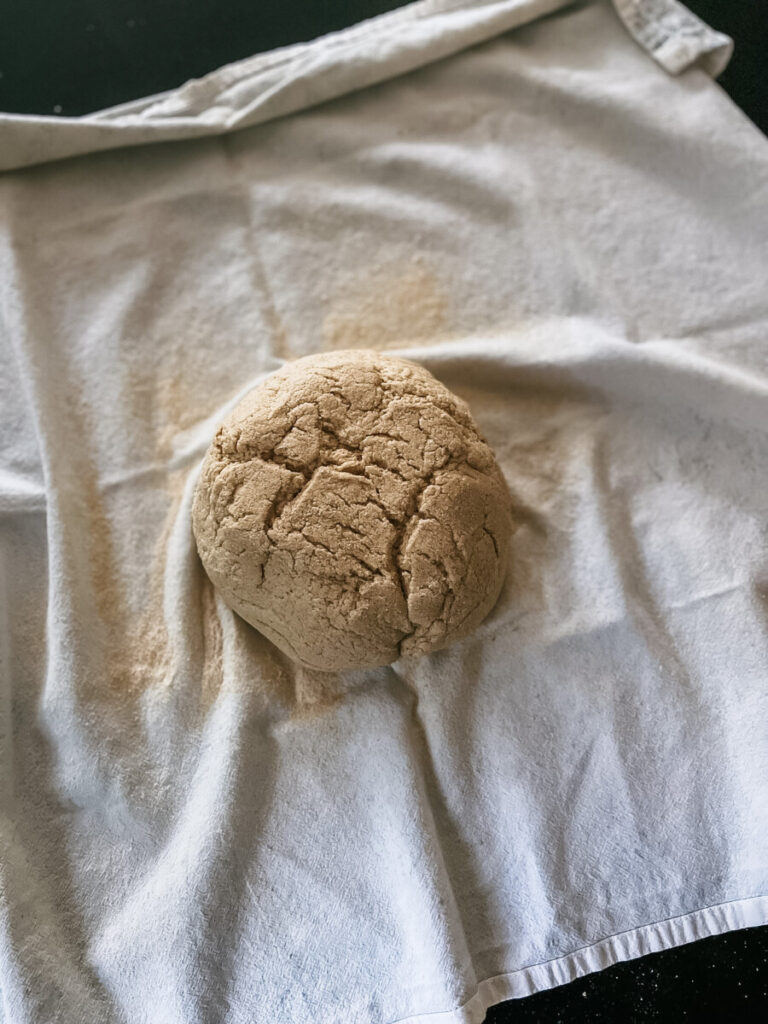
After 1+ hours of letting the dough rise on the counter, it should be twice the size, preheat oven to 450 degrees (maybe 425 depending on your oven) and place a covered dutch oven pan in oven for the last 10 minutes of the preheat process. Remove pan when oven is fully heated, slide dough into hot pan, cover and place in oven to bake for 35 minutes. Remove the cover and bake for an additional 5-15 minutes (be sure to not burnt he bottom of your loaf). Remove pan from oven and let loaf cool on a rack for up to 2 hours.
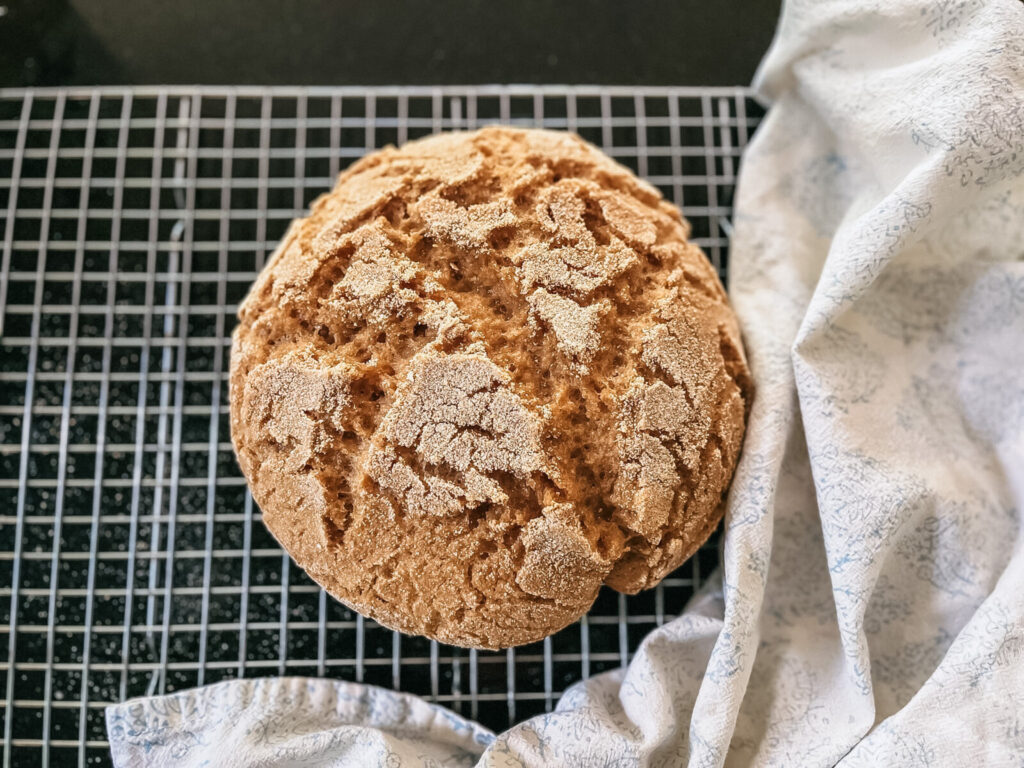
Voila! You’re officially a sourdough bread baker with fresh milled grain.To store, after cooling for at least 2 hours, store in a tight ziplock bag (a gallon sized freezer bag works great) or try using a reusable beeswax bread bag. I’ve noticed loaves made with fresh milled grain don’t last as long so try to eat within 2-3 days or freeze.
I hope you enjoyed this process as much as I do. To get access to how-to videos for making your loaf from start to finish, along with how to feed and care for your starter, click here.
Make More Sourdough with Halie Ramsey
If you love this recipe, let me know by giving it 5 stars!


